

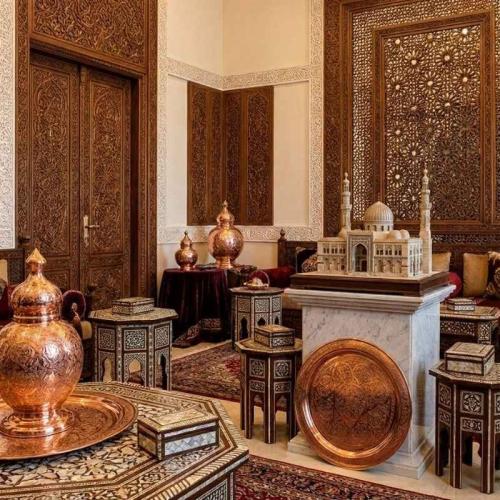
Eastern arts retain a unique charm that has always made them a refined choice for beauty enthusiasts around the world. And despite the rise of modern décor styles, Arab ornamentation—from arabesque patterns to copperware, mosaic art, and traditional figurines—remains strongly present. These pieces are not merely decorative items… they are stories from history told through breathtaking artistry.
In this article, we take you on a tour through the most iconic forms of these arts, and how they have become an essential part of luxury homes and Gulf-style majlis interiors.
1. What Is Arab Decorative Art?
Arab decorative art is a blend of intricate geometric lines, floral motifs, and harmonious repetitions that create a mesmerizing visual experience.
This art form emerged centuries ago in Islamic architecture—mosques, palaces, and historic structures—before gradually transitioning into furniture and home décor, becoming a symbol of authenticity and elegance.
2. Arabesque… Geometry of the Soul
Arabesque is the most iconic form of Arab art, built upon repetition and symmetry to create interlacing geometric and botanical patterns.
What sets it apart is the sense of depth and serene luxury it adds to any space.
Today, arabesque is used in:
- Carved wooden panels
- Doors and frames
- Decorated boxes
- Artistic sculptures
Its value increases significantly when crafted by hand, reflecting the skill and precision of the artisan.
3. Copperware… A Shine That Never Fades
Copper is among the oldest materials used in Eastern decorative artistry.
High-quality copper pieces combine strength, longevity, and timeless beauty that grows richer with age.
What distinguishes premium copperware:
- Often handcrafted with fine engravings
- Can be gold- or silver-plated for added luxury
- Ideal as meaningful gifts for religious or social occasions
- Adds warmth and elegance to majlis rooms and decorative displays
4. Mosaic Art (Fusayfisa’)
Mosaic art is one of the most beautiful forms of craftsmanship, blending simplicity with precision.
Each piece is made from hundreds—or even thousands—of tiny pieces of wood, glass, or shell, arranged into a harmonious, vibrant artwork.
Mosaic art is commonly used in:
- Wall murals
- Gift boxes and decorative items
- Tables and interior décor
- Artistic frames and ornamental details
This art form reflects refined taste and is often the focal point of any room it adorns.
5. Traditional Figurines… Symbols with Meaning
Traditional figurines have become some of the most sought-after décor items in the Arab world, as they combine beauty with cultural or spiritual symbolism.
One of the most notable is the Sacred Rawḍah Facade Sculpture, inspired by part of the Prophet’s Chamber in Madinah—a piece that blends sanctity, craftsmanship, and refined detail.
Why do many people prefer traditional figurines?
- They carry spiritual or cultural significance
- Often crafted from luxurious materials such as wood, marble, or copper
- Add a distinctly Arab identity to the home
- Perfect as centerpiece décor in living rooms and elegant offices
6. How to Choose the Right Artistic Piece for Your Home
Here are some tips to help you select Oriental décor in the best possible way:
✔ Choose according to the size of your space
Large sets are ideal for majlis and living rooms, while smaller art pieces suit offices and side corners.
✔ Match colors and materials
Copper paired with wood creates a warm atmosphere…
While mosaic combined with glass adds a modern artistic touch.
✔ Opt for handcrafted pieces
Handmade items have higher artistic value and longer lifespan.
✔ Place the piece where it can shine
Figurines, for example, stand out beautifully on premium shelves or side tables.
Conclusion
Oriental art is not just décor…
It is a spirit from the past displayed in the present with grandeur and elegance.
With evolving design tastes, arabesque pieces, mosaics, copperware, and traditional sculptures have become increasingly present in Gulf homes, blending authenticity with beauty and adding an unforgettable artistic identity.