

A timeless craft that transforms wood into pure elegance
The art of wood carving and mother-of-pearl inlay continues to captivate lovers of heritage and beauty. As one of the oldest fine arts in human history, it flourished in ancient civilizations and reached its peak with the renowned Damascene school, whose artisans transformed simple wood into exquisite masterpieces.
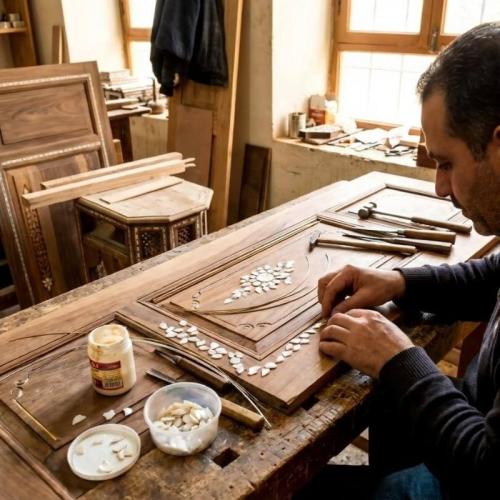
The process begins with the carpenter crafting the wooden base with precision. Then, an artist sketches intricate patterns, followed by the craftsman who carves fine grooves to embed silver tin threads. Finally, tiny pieces of shimmering mother-of-pearl are delicately placed into the carved spaces — resulting in a stunning fusion of craftsmanship, light, and natural materials.
Elegance in Every Detail
Wood inlay with mother-of-pearl relies on deep carving, coloring, and intricate pattern work, creating mesmerizing geometric and floral designs. These were traditionally used to adorn palaces, mosques, Quran stands, cabinets, and ornate boxes.
Some of the earliest examples of this art can still be admired in the Umayyad Mosque in Damascus and Al-Aqsa Mosque, where the beauty of hand-carved and inlaid wood has stood the test of time.
Types of Inlay Work
The craft includes different styles depending on the size and type of shell used:
- Tree-pattern inlay: Uses larger pieces of mother-of-pearl to decorate bigger furniture such as chests and chairs.
- Geometric inlay: Features smaller pieces, forming precise, detailed designs ideal for boxes and decorative objects.
Stages of Craftsmanship
Creating a mother-of-pearl inlaid piece requires patience, precision, and artistry. The process typically involves:
- Selecting the wood: Artisans favor local walnut wood for its durability, rich color, and natural beauty.
- Design and carving: Patterns are drawn and carved to prepare the spaces for tin and shell inlay.
- Embedding the tin and shell: Fine silver-colored tin threads are set into the carved grooves, followed by polished shell pieces fitted perfectly into place.
- Finishing touches: The piece is smoothed and polished to achieve a flawless surface that glows with warmth and sophistication.
Traditional Patterns
- Arabic carving
- Fatimid motifs
- Arab-style inlay
- Tree-pattern designs
Wood carving and mother-of-pearl inlay is more than a craft — it’s a dialogue between wood and sea, between patience and creativity. It embodies the soul of Islamic artistry and the enduring legacy of master craftsmen who have passed down their skills through generations.