

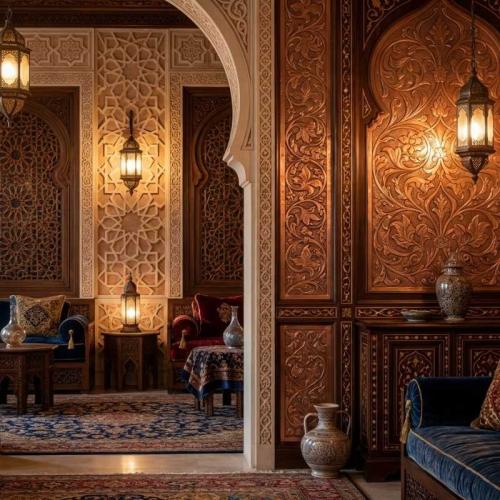
Many people often confuse Islamic ornamentation with Arabesque art and assume they are exactly the same. In reality, although they are closely related, each has its own distinctive artistic characteristics. Understanding the difference between them helps in choosing the right decorative style and adds greater harmony and beauty to interior design.
At Zarkshat Art, we are committed to offering artistic décor and handcrafted pieces inspired by both Islamic ornamentation and Arabesque art, combining authenticity with refined elegance.
What Is Islamic Ornamentation
Islamic ornamentation is a broad term that includes the various decorative styles that developed throughout Islamic civilization over centuries. These designs were widely used to decorate mosques, palaces, homes, furniture, and artistic objects.
Islamic ornamentation typically includes several main elements:
- - Repeating geometric patterns
- - Stylized floral and vegetal motifs
- - Decorative Arabic calligraphy
- - Balanced and harmonious compositions
These decorative elements aim to express beauty, order, and harmony while avoiding the depiction of living beings.
What Is Arabesque Art
Arabesque is one of the most well-known forms of Islamic ornamentation, but it focuses specifically on flowing, interlaced vegetal patterns that appear to extend infinitely.
Arabesque designs are characterized by:
- - Intertwined branches and leaves arranged in elegant patterns
- - Continuous repeating motifs
- - Fine details that showcase the skill of the artisan
- - A sense of rhythm and visual continuity
This artistic style has been widely used in traditional crafts such as wood carving, brass engraving, decorative panels, and handcrafted art pieces.
The Difference Between Islamic Ornamentation and Arabesque
The distinction between the two can be understood simply:
Islamic Ornamentation
A broad artistic concept that includes all decorative styles found in Islamic art, such as geometric patterns, vegetal motifs, and calligraphy.
Arabesque
A specific type of Islamic ornamentation that mainly focuses on stylized plant-based and flowing decorative patterns.
In other words, Arabesque is a part of Islamic ornamentation, but Islamic ornamentation includes much more than just Arabesque designs.
Using Arabesque and Islamic Ornamentation in Interior Design
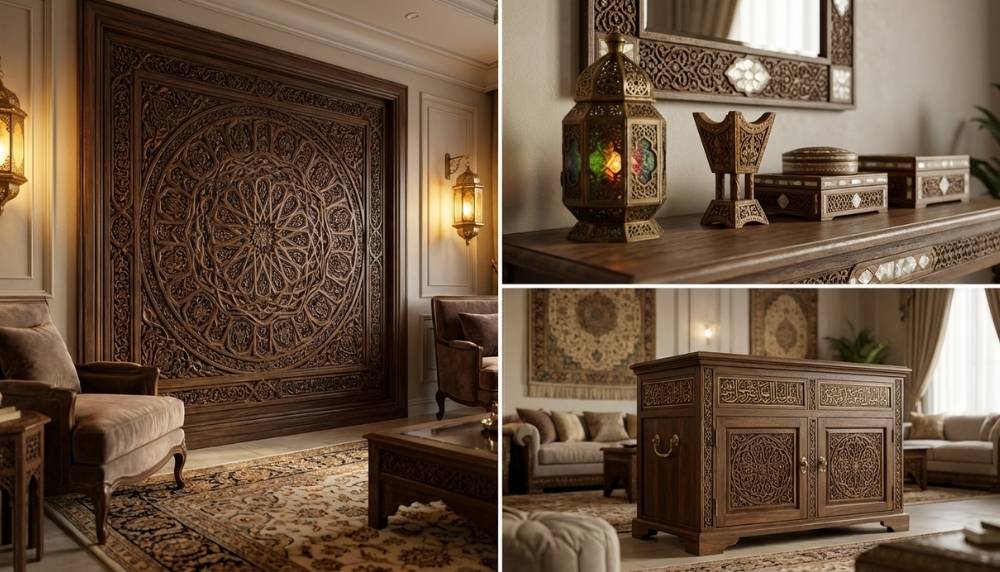
Today, these artistic patterns are widely used in interior design to create spaces that combine heritage with modern elegance.
Common uses in home décor include:
- - Decorative wall panels and artwork
- - Oriental artistic ornaments
- - Carved wooden doors and furniture
- - Brass lamps and decorative objects
- - Elegant handcrafted gifts
At Zarkshat Art, many products are carefully selected and designed with inspiration from these timeless artistic traditions, allowing lovers of oriental décor to bring a touch of authentic beauty into their homes.
Why Arabesque Is Popular in Interior Design
Arabesque designs remain a favorite choice in décor for several reasons:
- - They add elegance and luxury to any space
- - They combine traditional heritage with modern aesthetics
- - They create visual depth and artistic beauty
- - They are ideal for decorative art pieces and unique gifts
For this reason, Arabesque-inspired décor pieces have become distinctive elements that give character and identity to interior spaces.
Conclusion
Islamic ornamentation represents a rich world of decorative arts that reflects the beauty and sophistication of Islamic civilization, while Arabesque remains one of its most elegant and recognizable forms.
When incorporated thoughtfully into interior design, these artistic styles can bring timeless beauty, cultural depth, and refined elegance to any environment.
Through the collections offered by Zarkshat Art, admirers of oriental craftsmanship can discover unique decorative pieces and gifts that combine authenticity with artistic excellence.